

As energy costs continue to rise and sustainability becomes a strategic priority for manufacturers, investing in a high-efficiency boiler system is no longer just a technical decision – it is a long-term investment in operational efficiency, environmental performance, and business resilience.
Among today’s industrial steam generation solutions, biomass-fired water-tube boilers have become the preferred choice for many FDI manufacturers and large-scale industrial facilities. Their ability to deliver stable steam output, accommodate fluctuating process loads, achieve high thermal efficiency, and support the transition toward cleaner energy makes them an ideal solution for modern production plants.
Recognizing this growing demand, PREBECC has undertaken the engineering and fabrication of a 6 TPH two-drum water-tube boiler for an FDI manufacturer in Ho Chi Minh City. Fired by biomass fuel, the boiler was designed in accordance with ASME Section I – 2025 Edition, with quality compliance overseen by an authorized Third-Party Inspector specializing in boiler and pressure vessel systems.
More than a conventional boiler project, this development showcases PREBECC’s engineering expertise, manufacturing capability, and commitment to international quality standards in delivering reliable industrial boiler solutions.
1. Project Overview: 6 TPH Two-Drum Water-Tube Boiler
The project was developed for an FDI manufacturer requiring a reliable and continuous steam supply to support its production processes.
Key Technical Specifications
- Boiler Type: Two-drum water-tube boiler
- Fuel: Biomass
- Steam Capacity: 6 TPH
- Design Pressure: 10 bar
- Hydrostatic Test Pressure: 15 bar
- Design Standard: ASME Section I – 2025 Edition
- Project Scope: Engineering design, fabrication, quality control, hydrostatic testing, and final finishing
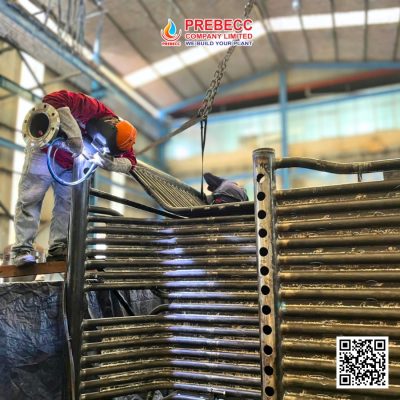
From the earliest design stage, PREBECC’s engineering team carried out comprehensive thermal and mechanical calculations, including the design of the steam drum, mud drum, furnace, convection section, and heat transfer surfaces. Every aspect of the boiler was optimized to ensure stable operation and efficient combustion when firing biomass fuel.
2. Biomass Boilers – A Sustainable Energy Solution for Modern Industry
Today, environmental responsibility has become just as important as operational performance when manufacturers evaluate long-term investments.
Biomass fuel is a renewable energy source derived from agricultural and forestry residues, including:
- Sawdust
- Wood chips
- Wood pellets
- Rice husks
- Bagasse
- Agricultural residues
Unlike fossil fuels, biomass is considered a renewable resource because it originates from organic materials that can be naturally replenished, supporting a more sustainable energy cycle.
Environmental Benefits of Biomass-Fired Boilers
Lower Greenhouse Gas Emissions
The carbon dioxide released during biomass combustion is generally offset by the carbon absorbed by plants throughout their growth cycle. This significantly reduces net CO₂ emissions compared with conventional fossil fuels.
Efficient Utilization of Local Biomass Resources
Using agricultural and forestry by-products as boiler fuel not only minimizes waste disposal but also creates additional economic value throughout the local supply chain.
Reduced Dependence on Fossil Fuels
Biomass provides manufacturers with a renewable alternative to coal, fuel oil, and natural gas, helping diversify energy sources while improving long-term energy security.
Supporting ESG and Net Zero Commitments
Many FDI manufacturers have established ambitious carbon reduction targets as part of their ESG and Net Zero strategies. Biomass-fired boiler systems offer a practical and proven solution for reducing environmental impact while maintaining reliable steam generation for industrial operations.
3. Water-Tube Boiler Fabrication with a Comprehensive QA/QC System
A well-engineered boiler design delivers its full value only when supported by a disciplined and standardized manufacturing process.
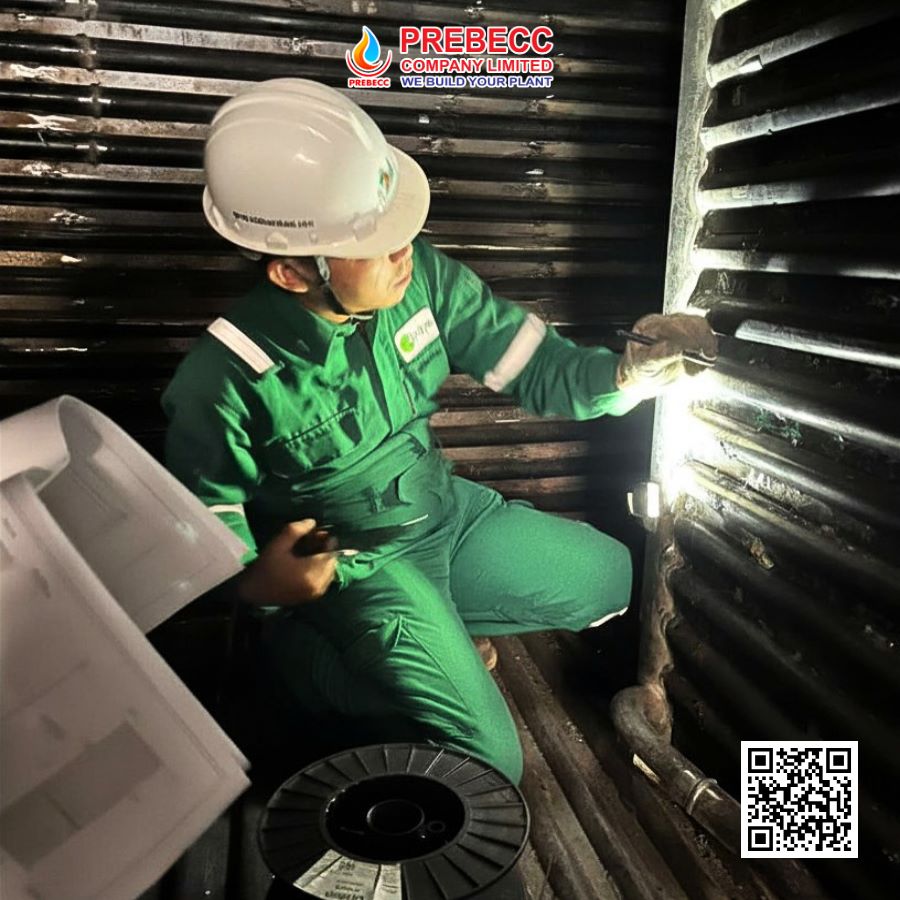
At PREBECC’s fabrication facility, every stage of production is governed by a comprehensive Quality Assurance and Quality Control (QA/QC) system, ensuring full traceability and compliance from raw material inspection through final completion.
Incoming Material Inspection
All materials undergo rigorous verification before entering production. Material Test Certificates (MTCs), traceability records, and material specifications are carefully reviewed to ensure full compliance with project requirements and applicable design codes.
Welding Quality Control
Welding is one of the most critical processes in the fabrication of boilers and pressure-retaining equipment.
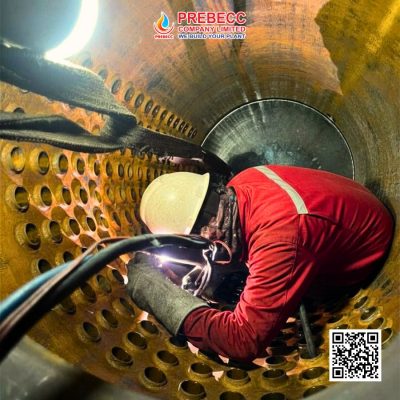
All welds on the steam drum, mud drum, headers, and pressure parts are performed in accordance with qualified:
WPS (Welding Procedure Specification)
PQR (Procedure Qualification Record)
In addition, all welding personnel assigned to the project are certified and qualified for the applicable welding procedures and material categories, ensuring consistent weld quality throughout the fabrication process.
Non-Destructive Testing (NDT)
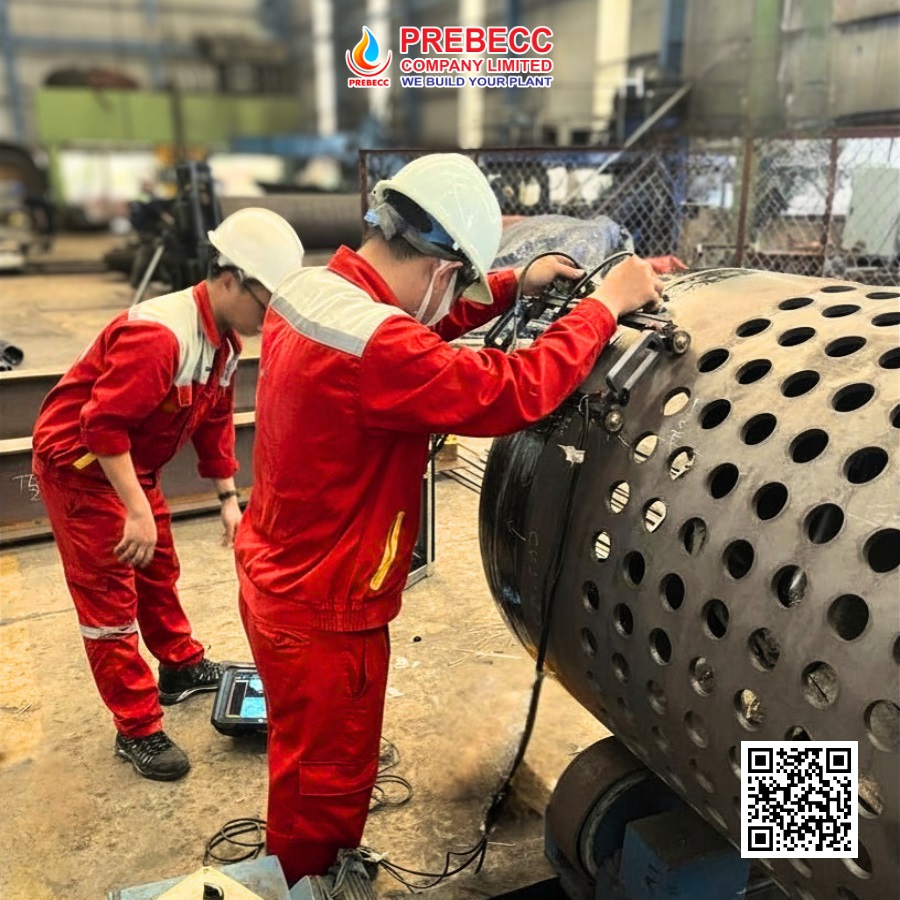
Non-Destructive Testing (NDT) is conducted at specified locations to verify weld integrity and detect any internal or surface discontinuities without compromising the material.
The NDT program helps ensure:
- Sound, crack-free welds
- No critical welding defects
- Long-term pressure tightness
- Compliance with the required design pressure
Hydrostatic Testing – A Critical Milestone Before Delivery
Upon completion of fabrication, the boiler underwent a Hydrostatic Test in accordance with the inspection procedures for pressure equipment.
For this project, the hydrostatic test was conducted at 15 bar, exceeding the design pressure to verify the structural integrity and pressure-retaining capability of the complete boiler pressure system.
The hydrostatic test is performed to:
- Verify the leak-tightness of all welded joints
- Confirm the structural integrity of the boiler
- Validate the pressure-retaining capability of all pressure parts
- Identify any abnormalities before commissioning
Successful completion of the hydrostatic test represents a key quality milestone, allowing the boiler to proceed to surface finishing and final preparation for delivery.
4. PREBECC’s Capability in Delivering Industrial Boiler Projects to International Standards
The 6 TPH two-drum water-tube boiler project demonstrates PREBECC’s integrated capabilities across the entire project lifecycle – from engineering design and fabrication to quality assurance and final inspection.
Beyond this project, PREBECC has successfully delivered a wide range of industrial boilers, pressure vessels, and energy system solutions for both domestic and international clients. Every project is executed in accordance with internationally recognized standards such as ASME and EN, while meeting the stringent technical requirements of FDI manufacturers and industrial facilities.
With extensive experience serving diverse industries, PREBECC continues to strengthen its engineering expertise, manufacturing capabilities, and quality management system to deliver reliable, high-performance solutions that ensure long-term operational safety, efficiency, and durability.
By implementing ASME Section I, maintaining a rigorous QA/QC management system, and working under the supervision of authorized Third-Party Inspectors, PREBECC is committed to delivering industrial boiler solutions built upon three core principles:
- Operational Safety
- Energy Efficiency
- Sustainable Development
As industries continue to transition toward cleaner and more sustainable energy sources, biomass-fired boilers have evolved beyond conventional steam generation equipment. They have become a strategic solution that enables manufacturers to improve energy efficiency, reduce carbon emissions, and support their long-term sustainability and decarbonization goals.